






Born and raised in Sydney, Lisa had always wanted to be a chef, despite it being a tough, male-dominated industry with unsociable working hours. Still, none of that stopped her, instead fuelling her to forge her way, put herself in kitchens with talented chefs and mentors and learn the craft – and that was only the beginning.

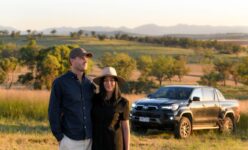
Lisa Margan was a hospitality teacher, then a chef, then a nutritionist, then a chef again. She’s a mother of three, a wife to winemaker Andrew, and is now the Managing Director at their Hunter Valley winery and restaurant, Margan. She’s a woman before her time and a pioneer of food tourism in this great southern land. Here’s how her journey from Sydney, to Bordeaux, to Moldova and home again unfolded…
1988 – Hawkesbury Agricultural College, Richmond, Australia
A city girl at heart, Lisa didn’t venture too far from the big smoke to tackle her first qualification – a degree in science and education at the Hawkesbury Agricultural College in Richmond.
“My first love is nutrition and everything to do with that space, so the decision to learn more about the science behind it was an easy one for me. It was there I met my now-husband Andrew – at the college bar. God knows what I was drinking, but it certainly wasn’t premium wine.”
1989 – Hunter Valley, Australia
Poor drink choices aside, Lisa married Andrew (a winemaker from the Hunter Valley) in 1989 and followed him to the renowned wine region. Sounds dreamy… sort of.
“The thing is, when you marry a winemaker you need to relocate to a rural region, whether you like it or not. These days it’s very fashionable, they call it a tree change. But back then I went kicking and screaming. All I can remember are the paddocks of long grass, insects everywhere and leaving behind my family and friends. It was a big adjustment for me because I was giving all those things up. But I got a job teaching hospitality, quickly made new friends and that helped me find my feet. The Hunter is a small but social community and now I happily call it home.”
1989 – The Cellar Restaurant, Hunter Valley, Australia
Lisa loved her work, but what she really wanted was to expand her cooking skills. So she reached out to one of Andrew’s family friends, renowned chef Robert Molines.
“After four years at university, I didn’t want to start from scratch – so I picked up some additional cookery study at TAFE and found myself an incredible mentor in Robert. He took me on as an apprentice at his venue, The Cellar Restaurant. Back then it was the place to be; people would helicopter up from Sydney just to dine there. It was a great training ground for me.”
1991– Bordeaux, France
Two years in, Andrew was offered a winemaking position in Bordeaux – a premium wine region in France. You don’t say no to the chance to make wine in France.
“So we went and it was perfect. He made wine and I cooked. We learned a lot, had so much fun and it really opened our eyes to the possibility of combining food and wine in our own offering back home. It’s what we call wine tourism now, but in the early 90s it wasn’t really a thing. We made a mental note, ready and waiting for future reference.”

1991 continued – Bordeaux, France
Not one to sit idle, Lisa worked in a bistro down by the river in Bordeaux. She didn’t realise it at the time, but it was a pioneering move.
“It was a very serious kitchen, fast and furious. I spoke barely any French, was just 25 years old and the only woman. It was tough – a traditional brigade-style kitchen, which was very disciplined and I was the only female. I kept my head down, my mouth shut and learned a lot. The role really connected me to the provenance of food. In Australia, we just had regular supermarkets with regular things. But France had that connection with seasons, the land and was led by what was growing at the time. We’d get excited about all the new season produce coming in one week, then weeks or months later the season is finished and they’re gone, so you rotate them off the menu. That’s how we should all be eating anyway because the nutritional value of food is better when it’s in sync with the season. Provenance is a trend that’s not going away; people want to connect with their food and they want to know the story behind it. You’ll see on menus now, this piece of produce is from that producer, it’s stated with pride, pivoting around hero ingredients and linked to their backstory.”
1992 – Sydney, Australia
In second year in France, Lisa discovered she was expecting their first child. It was an exciting time – but didn’t slow her down.
“I continued working in the kitchen up until I was seven months pregnant. At that point we made the decision to come back to Australia to have our baby back home in case there were any dramas. Thankfully, Ollie arrived safe and sound. When he was five weeks old, we went back to France. He still curses us that he missed out on an EU passport by five weeks!”
1992 continued – Chateau De Sours, Bordeaux, France
As the young family settled back into Bordeaux, Lisa sought out a more flexible work option – this time as a private chef at a wine chateau.
“The role gave me more flexibility because I wasn’t doing restaurant service, so I was able to have Ollie with me in the kitchen. Thank god he was an easy baby, because he was parked under the dining table while I worked. I slotted in prep time around his naps. Looking back now I think, how did I do it? No family nearby, no daycare, but you just have to roll with it. I can see how the world of women’s work is changing, giving more opportunities to combine paid work with the unpaid work of having children – it’s progressing and is more supportive, but there’s still a long way to go.”
1993 – Moldova, Eastern Europe
When the Berlin wall fell, it signalled the beginning of the end of the grip of the former Soviet Union across Europe. The Republic of Moldova, previously occupied by the Soviet Union post WW2 regained its independence in 1991 and began reconnecting with its traditional heritage and identity as a separate country. It was always a proud wine producing region so now renewed opportunities in the wine industry emerged from the rubble.
“Moldova was working hard to rebuild after Soviet occupation and many foreign wine companies were eyeing off investment opportunities in Moldova to reinvigorate their wine industry that had been left to languish. The French company Andrew worked for was one of them, and they offered him the chance to work there for a minimum of six months. When we said yes, Ollie hadn’t yet turned one.”
1993 continued – Kishinev, Moldova, Eastern Europe
While Andrew had a driver, translator and a challenging role as a winemaker, Lisa spent her days at home alone with Ollie. Still, she forged routine where possible and worked on her Russian daily.
“We lived in a tourist hotel, were paid in American dollars and a lot more than the locals earned, so in their eyes we were living like kings. In our room you could see where the rooms had been bugged, a hangover from communism. We arrived in spring and food was plentiful, but when winter hit and it was minus 25 and snowing fresh food was hard to find. My days were spent going for long walks, practising my Russian and we’d queue to buy food. Sometimes you could buy things from the black market. I bought Andrew an orange and a Mars Bar for Christmas – each would cost three American dollars at the local market; pulling out that kind of money would always draw a crowd and I knew I was buying from the Mafia, so sometimes that made me nervous. I missed having a kitchen so occasionally the ladies in the hotel kitchen would let me come in and cook something and take it back to our room to eat. These lovely ‘babushkas’ (grandmothers) would play with Ollie and watch me cook. We swapped recipes. I still have them, all written in Russian which I now can’t read! It’s a beautiful country and it was an incredible experience, but we missed Australia and knew it was time to return.”

1993 wraps up – Pokolbin, Hunter Valley, Australia
So Lisa and Andrew returned to Australia, ready and raring for their next adventure in the lucky country. They returned to their property based in Broke Fordwich in the Hunter Valley where they had already planted a vineyard.
“Australia is a great country – anyone who whinges about it needs to travel. It’s clean, it’s safe, it’s beautiful; everything is here for you and we knew we’d made the right choice to raise our children here. I returned to a part-time chef position and Andrew returned to work for Tyrrells, a winery in the Hunter.”
1994 – University of Western Sydney, Sydney, Australia
It had been a few years since Lisa had studied, so she was once again chomping at the bit to build on her qualifications. This time she took on a master’s degree in applied science and nutrition.
“By this time, I had Ollie and was pregnant with our daughter Alessa and had a part-time job – why I thought adding my master’s to the mix was a good idea I don’t know, but I did it. Because the other thing I learnt while overseas was the rise of the organic and the biodynamic movement. It was quite big in Europe and they had a lot of respect around that, as well as solid certification processes and programs. It piqued my interest and so I chose organic food production as a topic for my thesis.”
1995 – Maitland Hospital, Maitland, Australia
Soon after, Lisa scored her dream job as a nutritionist at Maitland Hospital.
“Those roles are incredibly hard to come by in this region, so I was thrilled when I secured the position and jumped all in. It enabled me to combine my love of food with my love of nutrition – those things really connect for me and align with my life values. Food is medicine and medicine is food.”
1996 – Broke, Hunter Valley, Australia
Lisa continued in this role until she went on leave with their third child. In the meantime, Andrew left Tyrrells and the two decided to launch their own business that same year.
“It sounds like madness for us to both leave our jobs, with small children and start a business. And it was, but in 1996 we started Margan Wines. It started out small, a contract winemaking business where we’d make wine for other people with vineyards. But it grew organically, and fast. The contract side of the business shrunk and the brand side developed quickly.”
1997 – Margan Wines, Broke, Hunter Valley, Australia
Neither Lisa or Andrew saw it coming – but business was booming and Lisa stayed on to continue growing the business. Today Margan Wines owns and operates 100 hectares of sustainably-farmed vineyards, all based in the Broke Fordwich wine region. They produce about 30,000 cases of wine annually, boast an acclaimed restaurant and cellar door which welcomes 25,000 people through their gates every year, export to 12 export markets and employ a team of 40.
“None of that was in the crystal ball and I actually thought I was ‘helping out Andrew’ before returning to my nutrition career. But a new pathway emerged and I knew that introducing wine tourism to our wine brand would be the next step. We had already built our winery in 1997 but wanted to build a cellar door and restaurant. We started with an empty paddock, took our time to get the design just right and drew a lot of inspiration from Europe. The building itself is built out of rammed earth using the gravel from our local quarry in Broke – that brings with it great thermal and acoustic properties, as well as a reduction in carbon footprint. It’s been standing there for 18 years now, but it looks timeless, as though it was always meant to be and that’s exactly what I wanted. It’s the perfect place for people to sit and enjoy the wine, looking over the vineyard while eating something wonderful.”
2007 – Margan Restaurant and cellar door, Broke, Hunter Valley, Australia
“We launched the restaurant and cellar door in 2007. We wanted an estate grown-estate made focus where the menu would feature as much estate grown produce as possible. So we built a large kitchen garden, orchard, had free range chickens, olive groves, our own estate reared lambs and bees. And of course, our wine. This keeps our carbon footprint light and allows our dining guests to connect to the provenance of their food and wine. It’s also great that the next generation are returning to the farm and the family business. Ollie is a winemaker and is now full time with us, and our other two may also return at some stage. We’ve been a hatted restaurant for the past eight years and are a five-star winery. Yes, we’re happy – but we still try and get better at what we do every year – we can’t wait to see what comes next.”
Fancy a tipple?
Margan Wines was built on the iconic wine varieties of the Hunter – we’re talking Shiraz, Semillon, Chardonnay and Cabernet. But it’s also proud to be a pioneering winery… here Lisa explains.
“We were the first winery to attain and plant Barbera. We’ve had around 22 vintages now and we’re well known for that wine, as well as field blends. These are co-planted varieties, meaning you plant them in the vineyard together, you pick them together, and you vinify them together – that means you ferment them together in the winery. Some examples are our Shiraz Mourvedre, that’s two varieties as a blend, Tempranillo Graciano Shiraz, as well as a Spanish variety called Alberino.”
Margan has been rated a five-star winery (James Halliday Wine Companion) since 2009, has been twice a winner of the Hunter Valley Cellar Door of the Year, as well as Viticulturist of the Year and the NSW Tourism Hall of Fame winner in recognition of their cellar door, winery and restaurant. Still, ask Lisa what her favourite wine is and she’ll give you a beautifully grounded response.
“It depends what I’m doing and is entirely driven by the company and the conversations. To be perfectly honest, if I’m with my mates and we’re chatting away, I barely notice what’s in my hand.”
Fair play. Visit Margan for yourself today.
1238 Milbrodale Road | Broke NSW 2330 | (02) 6579 1372 | Website | Facebook | Instagram | Photography Chris Elfes and Dominique Cherry


Steph Wanless
Grammar-obsessed writer, Kate Bush impressionist, fuelled by black coffee, British comedy and the fine art of the messy bun. Also loves cats.


